Stay up to date.
Stay connected with tips, resources & stories on language access.

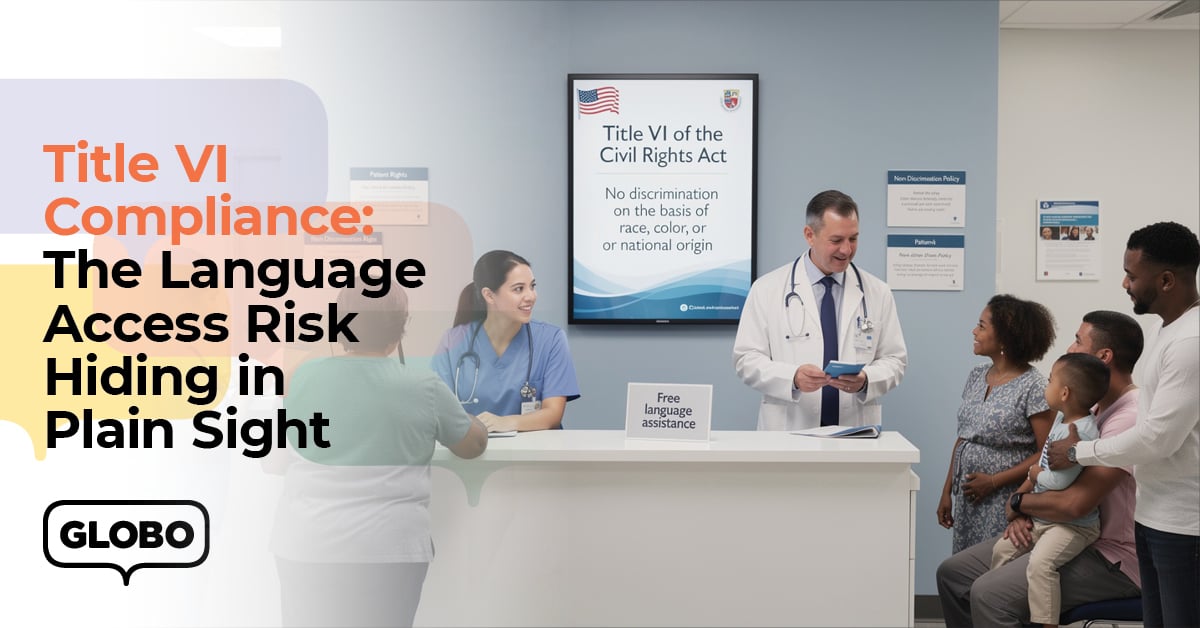
Most compliance risk gets attention because someone is actively looking for it. Language access risk is different. It tends to surface only after a complaint has already been filed.
Under Title VI of the Civil Rights Act, healthcare organizations that receive federal funding are required to provide meaningful access to LEP patients. That obligation is not new, but enforcement attention on language access has increased, and OCR complaints related to interpretation gaps are not rare events. They often start with something small: a discharge summary that was never translated, a consent form signed without a qualified interpreter present, a family member used to interpret a diagnosis because no one else was available.
The risk here is not just regulatory. It is clinical and reputational at the same time. A missed interpretation requirement can mean a patient did not actually understand their care, which is the same underlying failure whether it shows up as a compliance finding or a bad outcome. Title VI risk and patient safety risk are, in practice, the same risk viewed from two different angles.
The organizations most exposed are usually not the ones without an interpretation program. They are the ones without documentation showing the program was actually used consistently. If your policy says interpretation is offered for every LEP encounter, but you cannot show utilization data proving that happened, you have a policy on paper and a gap in practice. That gap is exactly what surfaces during an OCR review or a lawsuit.
Closing it starts with visibility: knowing how many LEP encounters your organization has, whether interpretation was used for each one, and where the exceptions are happening. On-demand interpretation access removes the excuse of "no interpreter was available," and quality monitoring provides the documentation trail that shows interpretation was not just offered, but delivered to a real standard.
Compliance should not be the reason your organization invests in language access. But it is a useful forcing function for asking a harder question: If an OCR complaint came in tomorrow, could you show your interpretation program actually works the way your policy says it does?
Schedule A Demo: https://www.helloglobo.com/schedule-a-demo
Ready to close the language gap in your customer experience?
Start a Conversation with GLOBO.